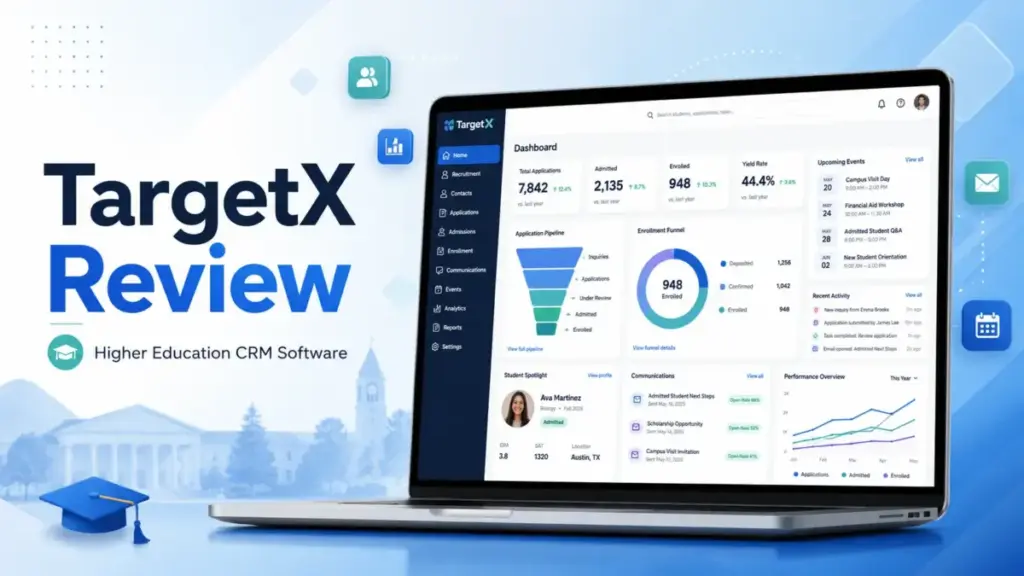
TargetX is not a standalone product. It is a Salesforce managed package, and that single architectural fact changes every question a higher-ed enrollment team needs to ask before signing a contract. This TargetX review breaks down what Liaison’s higher education CRM actually delivers for recruitment, admissions, retention, and student engagement, who it fits, who it does not fit, and what the real budget exposure looks like once you factor in Salesforce licensing, implementation, and ongoing administration.
Most review sites ranking CRM software repeat the same feature bullets and aggregate star ratings. None of them explain the Salesforce dependency, the API limits that can break email campaigns mid-cycle, or why a six-month implementation timeline is the reported average on G2. I evaluated TargetX across official Liaison documentation, Salesforce AppExchange data, published help articles, and over 60 verified user reviews on G2, Capterra, TrustRadius, and SoftwareFinder to build a procurement-grade assessment, not a marketing summary.
If your institution already runs Salesforce and has dedicated CRM administration capacity, TargetX belongs on your shortlist. If you need a low-admin, transparent-priced admissions CRM that a three-person enrollment office can own without IT support, skip to the alternatives section.
The 3 Problems TargetX Solves
TargetX earns its place in higher-ed CRM conversations because it addresses three operational problems that generic CRMs ignore entirely.
Unified Recruitment-to-Retention Lifecycle on Salesforce
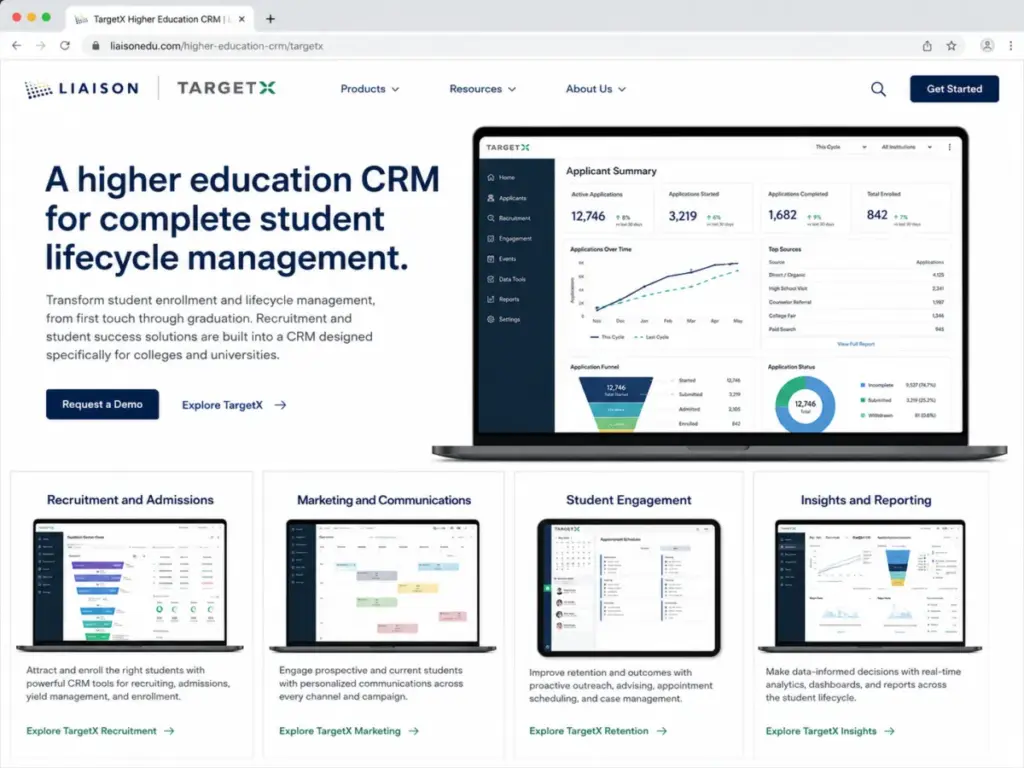
Liaison positions TargetX as a complete student lifecycle CRM, covering first inquiry through graduation. The official product page lists four major modules: Recruitment and Admissions, Marketing and Communications, Student Engagement, and Insights and Reporting. TrustRadius confirms TargetX is built on the Salesforce.com development platform and tailored specifically for student recruitment and retention.
The practical value: admissions counselors, retention specialists, and marketing staff share one data layer. A prospective student’s inquiry, application, enrollment decision, and retention case all live inside the same Salesforce org. That eliminates the data-sync gaps you get when stitching together separate recruitment and retention tools.
Standardized Application Review with Scoring Rubrics
Application Review is one of TargetX’s standout capabilities. The official Application Review page states the tool supports data-driven review using institution-defined scoring rubrics and collaboration workflows designed to reduce administrative work. A verified G2 reviewer calls Application Review one of TargetX’s best tools for standardizing the review process.
This matters for admissions offices processing thousands of applications: instead of routing PDFs through email chains, reviewers score applicants against consistent criteria inside Salesforce. The scoring data feeds directly into enrollment dashboards.
The caveat: Application Review is a reason to shortlist TargetX, but the overall buying decision still depends on Salesforce readiness, reporting capabilities, pricing, and implementation resources.
Bi-Directional SIS Integration
The official TargetX Recruitment FAQ confirms bi-directional integrations with major Student Information Systems: Banner, Colleague, PeopleSoft, PowerCampus, Jenzabar, and even homegrown or mainframe systems. Liaison’s integration help documentation shows these connections run through Informatica ETL processes, including CAS, EMP, Othot, and WebAdMIT workflows.
For enrollment operations teams, this means admissions decisions, student records, and financial aid data can flow between TargetX and the SIS without manual re-entry. That integration depth is hard to replicate with a non-Salesforce CRM that lacks pre-built higher-ed connectors.
The 2 Problems TargetX Creates
Every CRM solves some problems and creates others. TargetX creates two that buyers consistently underestimate.
The Salesforce Administration Burden
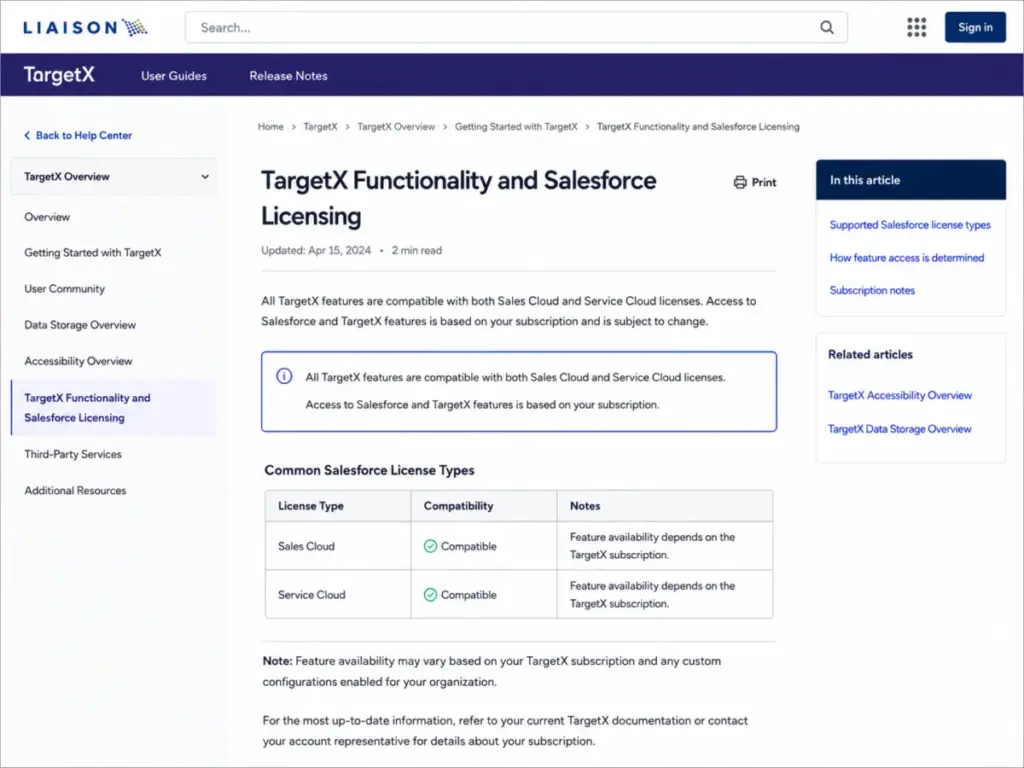
TargetX is not a SaaS product you can configure in a browser and forget. It inherits Salesforce’s full administration complexity. Official TargetX help documentation states all features are compatible with Sales Cloud and Service Cloud licenses, and access to both Salesforce and TargetX features depends on your subscription tier.
Because TargetX depends on that stack, the Salesforce CRM review is useful context before treating it as a standalone admissions CRM.
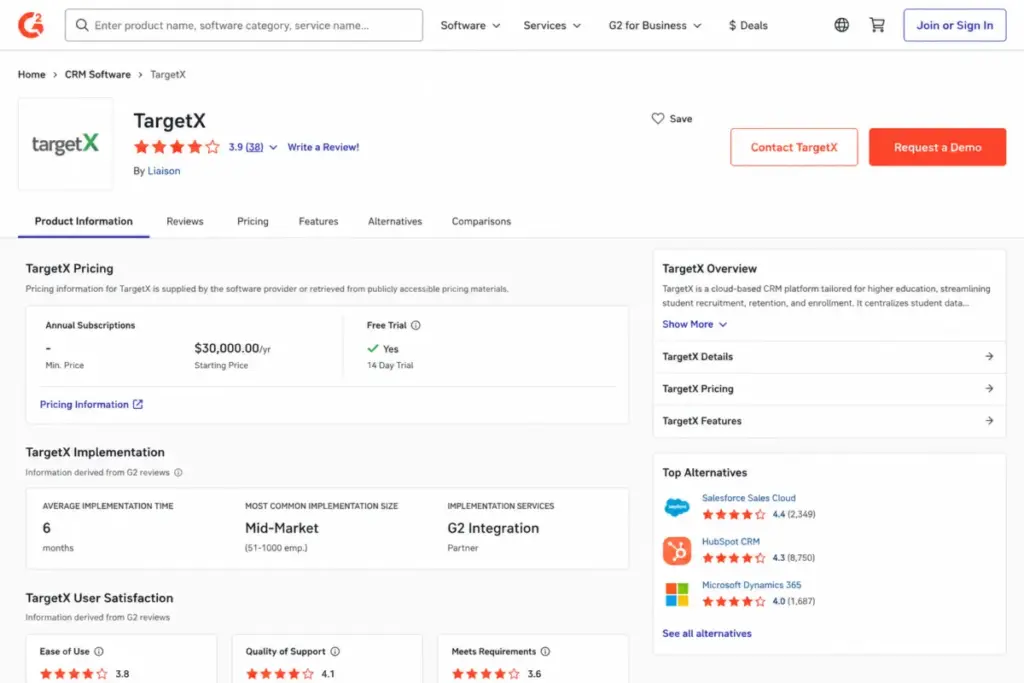
What that means in practice: your institution needs at least one person (often two or more) who understands Salesforce administration, not just TargetX configuration. A G2 reviewer notes that TargetX can require an IT team of two or more people or additional configuration services. G2’s aggregated data reports TargetX’s perceived cost as high and the average implementation time as six months.
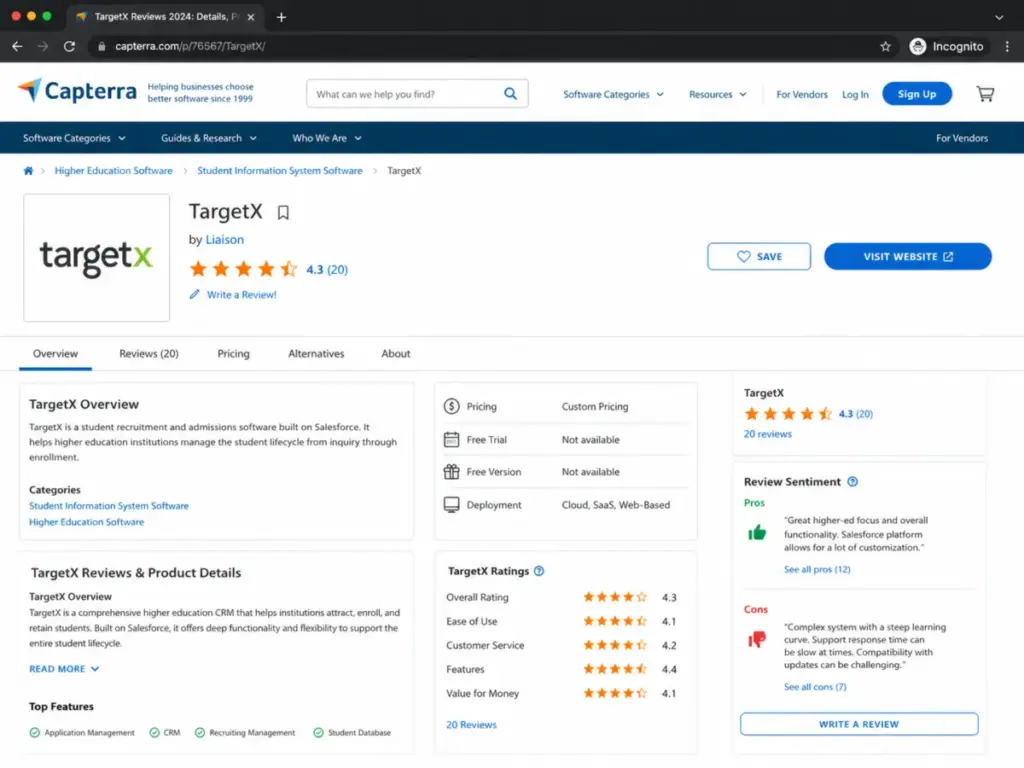
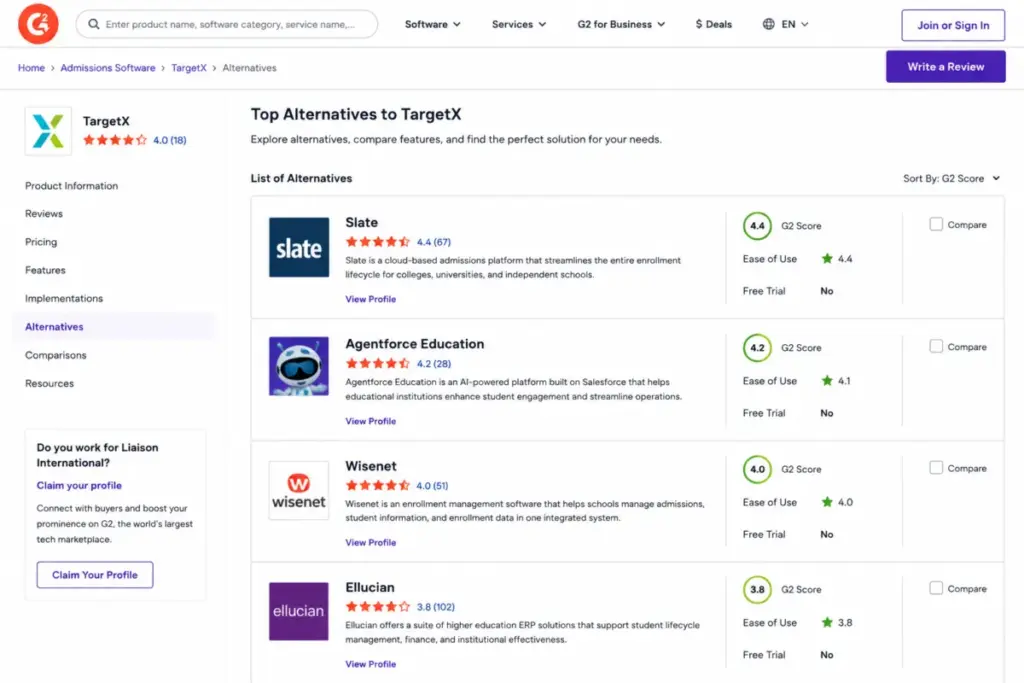
The G2 profile shows TargetX at 3.9 out of 5 from 38 reviews, with reviewers praising flexibility, customization, and support while warning about UI complexity and difficulty navigating the platform for new users. Capterra shows a 4.3 rating from 20 reviews, with a 4.2 for ease of use and 4.5 for features.
API Limits That Can Break Connected Workflows
This is the risk most review sites never mention. TargetX inherits Salesforce’s API constraints, and those constraints have real operational consequences.
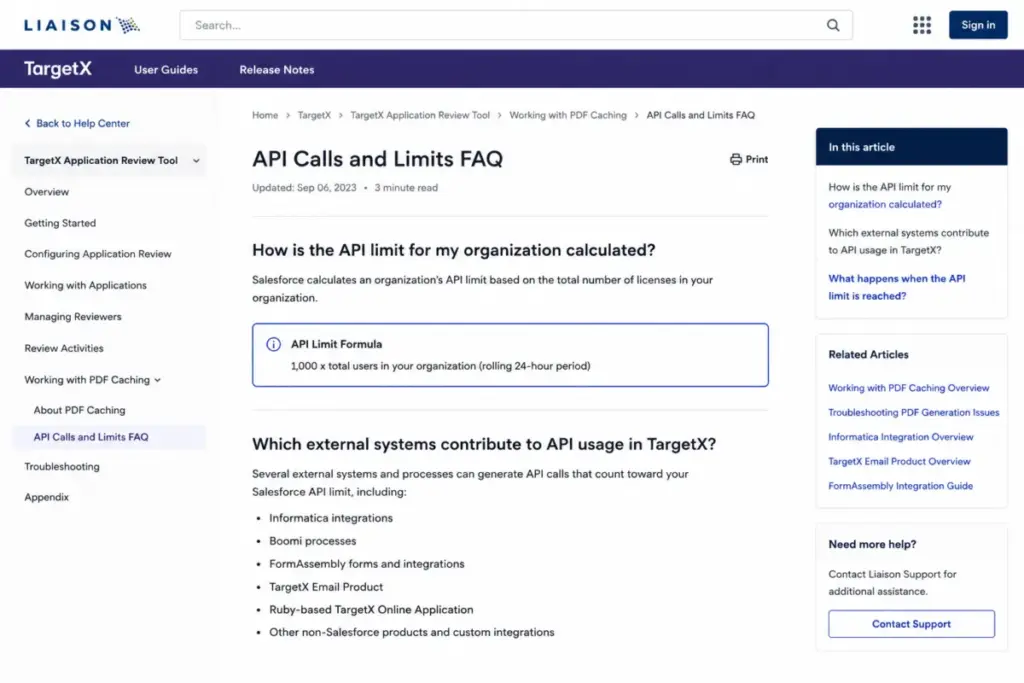
The official TargetX API Calls and Limits FAQ states Salesforce calculates an organization’s API limit as 1,000 multiplied by total users during a rolling 24-hour period. External systems like Informatica, FormAssembly, the TargetX Email Product, the Ruby-based TargetX Online Application, and other non-Salesforce products all consume API calls from the same pool.
When API limits get hit, the official documentation confirms these components can fail: Informatica integrations, FormAssembly form submissions, event registration, TargetX broadcast emails, email campaigns, TargetX Chat, Decision Module PDF caching, and SSO to FormAssembly and Informatica.
Picture this scenario: it is yield season, your team is sending broadcast emails, prospective students are submitting applications through FormAssembly, and your SIS integration is running its nightly Informatica sync. All three systems draw from the same API pool. Hit the ceiling, and email campaigns stop sending, application submissions fail, and your data sync breaks.
This is not theoretical. The official help documentation exists because it is a known operational concern.
TargetX Pricing: What You Can and Cannot Confirm in 2026
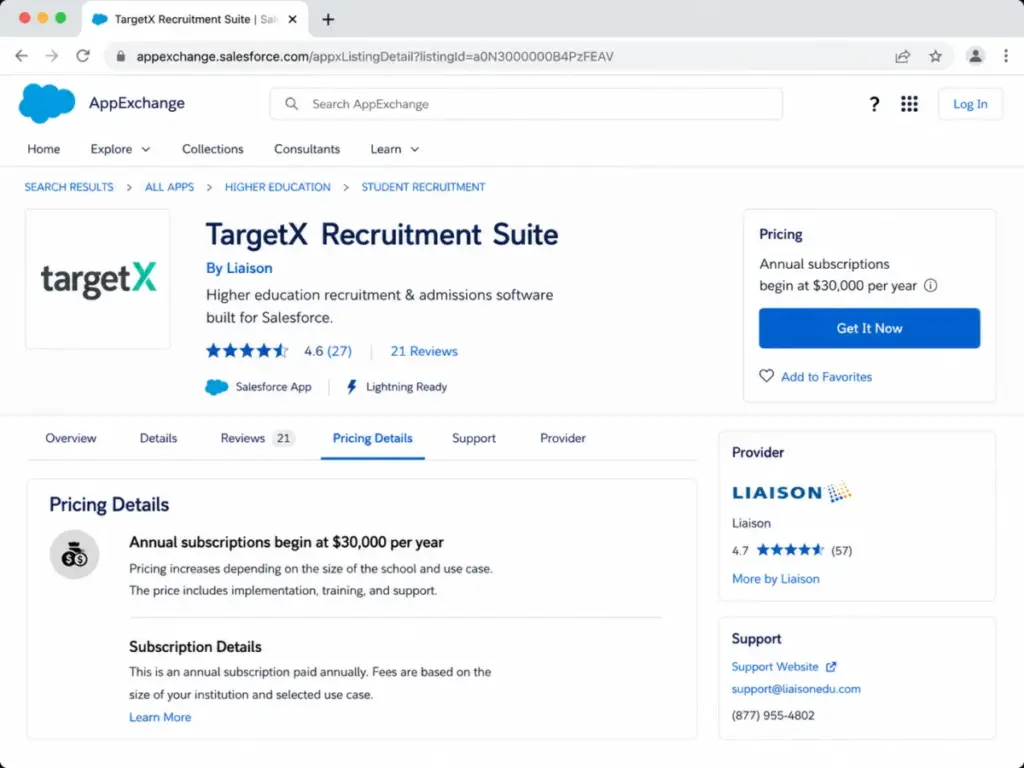
Liaison does not publish a full pricing table for TargetX (as of May 2026). That is the first thing every buyer needs to understand.
Here is what public evidence confirms:
| Pricing Signal | Source | Detail |
|---|---|---|
| Starting annual cost | Salesforce AppExchange listing | Annual subscriptions begin at$30,000 per year, increasing by school size and use case |
| Monthly pricing | Not publicly listed | Liaison uses a custom quote model |
| Free tier | Not confirmed | Capterra states free trial is not available |
| Plan tiers | Not publicly disclosed | Official docs say feature access depends on subscription and Salesforce license type |
| TrustRadius pricing | TrustRadius | Listed as N/A or unavailable |
Pricing metadata on Capterra and GetApp is inconsistent. Some regional pages show conflicting data including placeholder values. Do not treat marketplace pricing metadata as the official plan table.
The Total Cost Buyers Need to Quote
The $30,000-per-year starting price is only the TargetX subscription. The real budget exposure includes multiple line items that Liaison’s marketing page does not itemize:
- Salesforce licensing: TargetX requires Salesforce. Your institution needs Sales Cloud or Service Cloud licenses for each user. Exact license cost depends on your Salesforce agreement.
- Implementation services: Liaison offers implementation support, training, and managed services. G2 reports an average implementation time of six months.
- Premier Services: Liaison offers three tiers of Premier Services for CRM administration, training, configuration, and upgrade management. Tier names and pricing are not publicly disclosed.
- Integration build: SIS integrations (Banner, Colleague, PeopleSoft) run through Informatica ETL processes. Building and maintaining those connections requires technical resources.
- Third-party tools: FormAssembly, Informatica, Conga, DemandTools, payment gateways (PayPal, TouchNet, Elavon, CASHNet, Nelnet, CyberSource, ACI/OPC), and data vendors like Axiom appear in official support documentation as common additions.
- Dedicated admin staffing: At minimum one Salesforce administrator; reviewer sentiment suggests two or more for larger implementations.
- SMS, email, and API usage management: Exact limits and overage fees are not publicly documented.
Ask Liaison for a total-cost quote covering all of these components before comparing TargetX against alternatives.
TargetX Features: What Each Module Delivers
The official Liaison product page and legacy TargetX site confirm these capability areas. Feature access depends on your subscription and Salesforce license type.
Recruitment and Admissions
TargetX Recruitment includes mobile-first online applications, a personalized student portal, and custom communication tools. The platform supports email campaigns, email templates, SMS and text messaging, and event management with attendee tracking. The appointment scheduler and TargetX Engage (walk-in tracking) add operational value for campus visit coordination.
Application Review
Institution-defined scoring rubrics. Collaborative review workflows. PDF caching for reviewer access. This module addresses a genuine workflow gap that most generic CRMs cannot fill.
Retention and Student Success
TargetX Retention provides case management for at-risk students, appointment scheduling, and engagement tracking. This module extends the CRM beyond admissions into student success, which matters for institutions measuring retention and graduation rates.
Marketing Communications
Email campaigns, broadcast messaging, SMS texting, and template management. The communication suite is broad, but reviewers flag specific limitations (covered in the next section).
Insights and Reporting
Dashboards, enrollment reporting, and analytics built on Salesforce’s reporting engine. The strength here is Salesforce’s native reporting flexibility. The weakness: some reviewers report difficulty building reports on certain fields and features.
TargetX Limitations: What Reviews Consistently Flag
I tracked recurring themes across G2, Capterra, TrustRadius, and SoftwareFinder reviews. These are not isolated complaints; they represent patterns.
UI Complexity and Glitches
A verified G2 user states plainly: “Not always user friendly. Many glitches.” SoftwareFinder review aggregation repeats concerns about regular glitches, a disjointed interface, and integration build time. G2 reviewers consistently note difficulty navigating the platform, especially for new users. The platform feels feature-rich but overwhelming, a common Salesforce-based tool tradeoff.
SMS Reporting and Logging Gaps
G2 reviewer Cheryl D. reports that certain fields and features are difficult to report on and that the newer SMS system was not logging text messages to the student detail screen in her experience. This is a recurring due-diligence question: ask Liaison to demonstrate SMS logging and reporting capabilities during your demo.
Reporting Friction
Salesforce’s reporting engine is flexible, but TargetX-specific fields and custom objects add complexity. Reviewers mention difficulty creating reports on certain data points, hidden settings in Salesforce custom settings, and inconsistency between what the platform captures and what you can extract in reports.
Upgrade and Configuration Management
Official pages confirm Liaison offers Premier Services for upgrade management and configuration. The implication: major platform upgrades are not always self-service. Teams without Premier Services or internal Salesforce expertise can fall behind on version updates and miss new functionality.
TargetX Pros and Cons
What works well:
- Higher-ed workflow depth: Recruitment, admissions, application review, retention, and engagement in one Salesforce org. Few competitors match this breadth.
- Application Review tool: Standardized scoring rubrics and collaborative review workflows are a genuine differentiator for admissions-heavy operations.
- SIS integration coverage: Pre-built connectors for Banner, Colleague, PeopleSoft, PowerCampus, Jenzabar, and homegrown systems through Informatica ETL.
- Salesforce extensibility: Institutions already running Salesforce gain AppExchange access, custom objects, automation, and the full Salesforce API ecosystem.
- Support and client success: Capterra rates customer service at 4.3 out of 5. Official pages emphasize dedicated client success managers, white-glove service, and three tiers of Premier Services.
- Mobile-first student experience: Mobile-first applications, the Schools App mobile community, and event check-in app serve students where they engage.
What creates friction:
- Opaque pricing: No public plan table. Annual subscriptions start at $30,000 per year before Salesforce licensing, implementation, and add-ons.
- Salesforce admin dependency: Requires dedicated administration capacity that lean enrollment teams often lack.
- Six-month average implementation: G2 data reports this as the typical timeline. Not a quick-start platform.
- API limit risk: Salesforce API ceiling affects email campaigns, integrations, FormAssembly submissions, and event registration simultaneously.
- UI inconsistency and glitches: Reviewers across multiple platforms flag navigation difficulty, glitches, and hidden Salesforce custom settings.
- SMS reporting gaps: User reports indicate the SMS system has had issues logging messages and generating reports.
- Reporting complexity: Salesforce reporting is flexible but building TargetX-specific reports requires Salesforce knowledge and patience.
Security, Accessibility, and Compliance
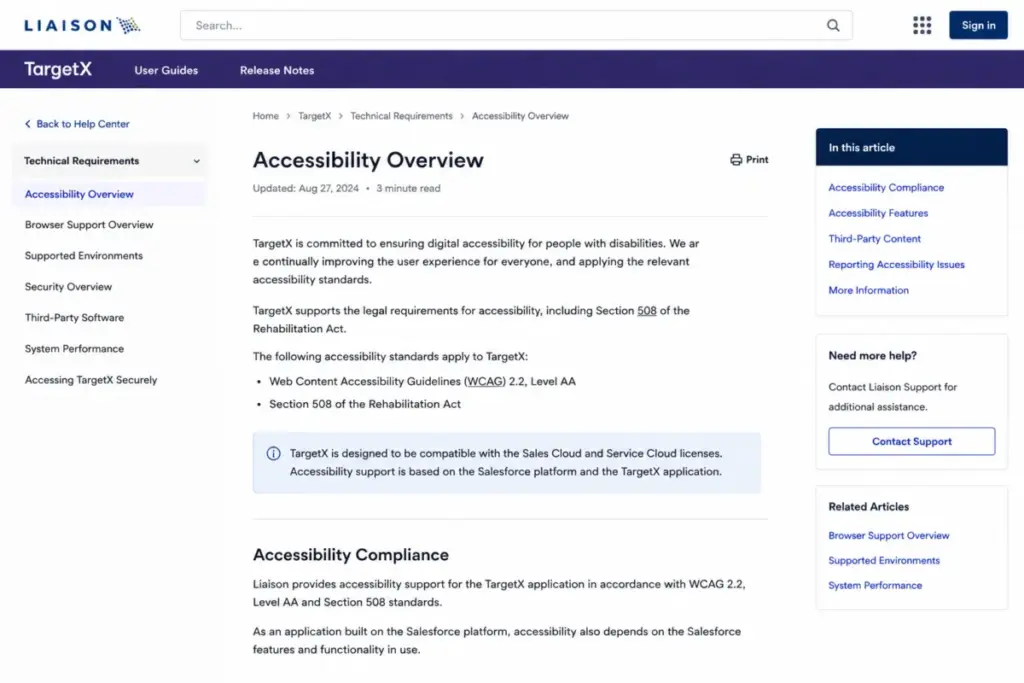
The official TargetX Accessibility Overview confirms the team is meeting WCAG 2.0 AA accessibility requirements and working toward WCAG 2.1 Level AA where applicable. Section 508 compliance work and VPAT documentation are referenced.
Public TargetX-specific evidence for SOC 2, FERPA, HIPAA, ISO 27001, or GDPR certification was not verified during this research. Buyers should request security documentation, a Data Processing Agreement, VPAT, FERPA posture statement, SOC 2 report (if available), and data-processing details directly from Liaison during procurement.
User Sentiment: What Reviewers Actually Say
| Platform | Rating | Review Count | Key Positive | Key Negative |
|---|---|---|---|---|
| G2 | 3.9/5 | 38 reviews | Flexibility, customization, support | UI complexity, navigation difficulty, glitches |
| Capterra | 4.3/5 | 20 reviews | Features (4.5), customer service (4.3) | Free trial not available, learning curve |
| TrustRadius | Available | Limited volume | Salesforce platform, bulk email, event management | Older review dates, pricing unavailable |
| SoftwareFinder | Available | Aggregated | Admissions workflows, communication tools | Glitches, disjointed interface, SMS weakness |
“TargetX still provides a great Admissions Platform on Salesforce.” – Timothy H., CEO (Capterra)
Aggregated reviewer sentiment: users value the flexibility, higher-ed workflow depth, application review, communication tools, and support. They warn about UI complexity, reporting friction, SMS limitations, glitches, and Salesforce administration overhead.
Best TargetX Alternatives by Scenario
The right alternative depends on why TargetX does not fit your institution. Here is how each competitor wins in specific scenarios.
| Scenario | Best Alternative | Why |
|---|---|---|
| Admissions-first, community-driven, transparent licensing | Slate by Technolutions | Slate dominates admissions-specific workflows with a large user community and transparent licensing model |
| Salesforce platform strategy bigger than admissions | Salesforce Education Cloud / Agentforce Education | If your institution wants Salesforce-native across all departments, Education Cloud is the platform play |
| AI-first engagement and modern enrollment UX | Element451 | Element451 focuses on AI-driven student engagement with a modern interface and no Salesforce dependency |
| ERP/SIS ecosystem alignment | Ellucian CRM Recruit / Ellucian Student | Ellucian owns the SIS (Banner, Colleague), so CRM-to-SIS integration is native, not bolted on |
| Budget-constrained, needs fast deployment | Meritto or Anthology Reach | Lower entry cost, faster implementation, less admin overhead than a Salesforce-based stack |
| International enrollment focus | Wisenet | Built for education providers outside the US higher-ed market with different compliance and workflow needs |
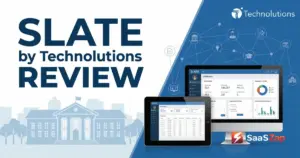
Slate by Technolutions
Slate is the most common TargetX alternative for admissions teams. It does not require Salesforce, has a large and active user community that shares configurations and best practices, and licensing is typically more transparent. Choose Slate if your primary need is admissions-specific CRM with peer community support. TargetX is stronger if you need Salesforce extensibility and lifecycle coverage beyond admissions.
Salesforce Education Cloud
If your institution’s Salesforce strategy extends beyond enrollment into advancement, student services, and campus operations, Salesforce Education Cloud is the platform-level alternative. It replaces TargetX’s managed-package approach with Salesforce-native education objects. The tradeoff: Education Cloud is newer, and TargetX has deeper admissions-specific workflows built over a longer product history.
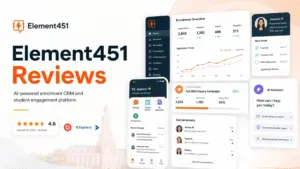
Element451
Element451 positions itself as an AI-first student engagement platform with a modern UX that does not depend on Salesforce. Competitor positioning from Element451 describes TargetX as proficient in application management but complex to deploy and maintain. Choose Element451 if modern engagement UX and AI-driven personalization are your priorities. Choose TargetX if you need Salesforce ecosystem depth and Application Review workflows.
Ask TargetX Before You Buy: The Demo Checklist
Before signing a contract, request clear answers on these items:
- Total annual cost: TargetX subscription plus Salesforce licenses plus implementation plus Premier Services plus integrations plus SMS/email usage.
- Salesforce license assumptions: Which license type (Sales Cloud, Service Cloud) and how many seats are included or required?
- Implementation timeline: What is the projected timeline for your specific institution size and integration scope?
- Data migration scope: What data moves from your current system, and who owns the migration work?
- SIS integration specifics: Which SIS do you run, and what does the Informatica ETL setup require?
- SMS logging and reporting: Can you demonstrate SMS messages logging to the student detail screen and appearing in reports?
- API usage monitoring: How do you monitor API consumption, and what happens when limits are approached?
- Upgrade ownership: Who manages TargetX version upgrades, and what is the testing and rollback process?
- Premier Services tier: Which tier do you recommend, and what does each tier cost annually?
- Security documentation: Provide VPAT, FERPA posture, SOC 2 report (if available), DPA, and data residency details.
- Exit process: How do you export all data if you leave TargetX, and in what format?
Who Should Use TargetX
Choose TargetX if your institution meets all three conditions:
- You are already committed to Salesforce or Liaison’s product ecosystem and have (or will hire) dedicated Salesforce administration capacity.
- You need recruitment, admissions, application review, retention, and SIS integration in one platform, not just a marketing CRM.
- Your enrollment operations budget can absorb a $30,000-plus annual subscription before Salesforce licensing, implementation, and ongoing services.
Who Should Avoid TargetX
Avoid TargetX if any of these apply:
- Your admissions team has fewer than three people and no IT support for Salesforce administration.
- You need transparent, self-service pricing you can budget without a sales call.
- You want a CRM that nontechnical enrollment staff can configure and maintain without Salesforce expertise.
- Fast deployment matters: six months of implementation is not acceptable for your timeline.
- You prioritize modern, AI-first engagement UX over Salesforce ecosystem depth.
Final Verdict: TargetX Earns 6.5/10
TargetX earns 6.5/10 in this review. It is not a bad product. It is a specialized product with a narrow ideal buyer.
TargetX is best for enrollment management teams at US colleges and universities that are already committed to Salesforce and can support the implementation, integration, and ongoing administration that a Salesforce managed package demands. Application Review, SIS integration depth, and lifecycle coverage from recruitment through retention are genuine strengths that few competitors match in one platform.
TargetX is not the best fit for small colleges, lean admissions teams, or first-time CRM buyers. The opaque pricing, six-month average implementation, Salesforce admin dependency, and API limit risks create a total cost of ownership that only makes sense for institutions with the budget and staff to support it.
Choose Slate by Technolutions if admissions workflow community and transparent licensing matter more than Salesforce extensibility. Choose Element451 if AI-first enrollment engagement and modern UX are your priority. Choose Ellucian CRM if your SIS ecosystem alignment with Banner or Colleague outweighs everything else.
I did not score this product based on brand popularity alone. The 6.5 reflects strong higher-ed domain depth offset by pricing opacity, implementation overhead, admin burden, and operational risks that competing platforms handle with less friction.
FAQ
Is TargetX worth it in 2026?
TargetX is worth it for Salesforce-committed institutions with dedicated CRM administration, a $30,000-plus annual budget for the subscription alone, and a need for recruitment-to-retention lifecycle coverage. It is not worth the investment for lean teams that lack Salesforce expertise or need transparent pricing.
How much does TargetX cost?
The Salesforce AppExchange listing indicates annual subscriptions begin at $30,000 per year (as of May 2026), increasing by school size and use case. Liaison does not publish a full plan table. Total cost includes Salesforce licenses, implementation, Premier Services, integrations, and admin staffing.
Does TargetX require Salesforce?
Yes. TargetX is a Salesforce managed package. Official documentation confirms all features are compatible with Sales Cloud and Service Cloud licenses. Your institution needs active Salesforce licensing to run TargetX.
How long does TargetX take to implement?
G2 reports an average implementation time of six months. Actual timelines vary by institution size, SIS integration scope, data migration complexity, and internal Salesforce administration capacity.
Does TargetX integrate with Banner, Colleague, and PeopleSoft?
Yes. Official documentation confirms bi-directional SIS integrations with Banner, Colleague, PeopleSoft, PowerCampus, Jenzabar, and homegrown systems through Informatica ETL processes.
What are the main TargetX pros and cons?
Pros: higher-ed lifecycle depth, Application Review, SIS integration, Salesforce extensibility, and dedicated support. Cons: opaque pricing, Salesforce admin dependency, six-month implementation, API limit risk, UI glitches, and SMS reporting gaps.
Is TargetX good for small colleges?
Not typically. Small colleges with lean admissions teams (under three people) and no dedicated Salesforce administrator will likely find the implementation timeline, ongoing admin burden, and total cost excessive compared to alternatives like Slate or Element451.
What is the best alternative to TargetX?
The best alternative depends on your exit reason. Slate by Technolutions for admissions-specific workflows and community support. Element451 for AI-first enrollment engagement. Salesforce Education Cloud for broader Salesforce platform strategy. Ellucian for native SIS ecosystem alignment.
Does TargetX have a free trial?
No confirmed free trial. Capterra’s profile states free trial is not available. Some marketplace pages show conflicting metadata, but buyers should verify trial availability directly with Liaison.
Who owns TargetX?
Liaison International acquired TargetX in October 2020 to build a full student lifecycle solution. TargetX now operates as part of Liaison’s higher education product portfolio.