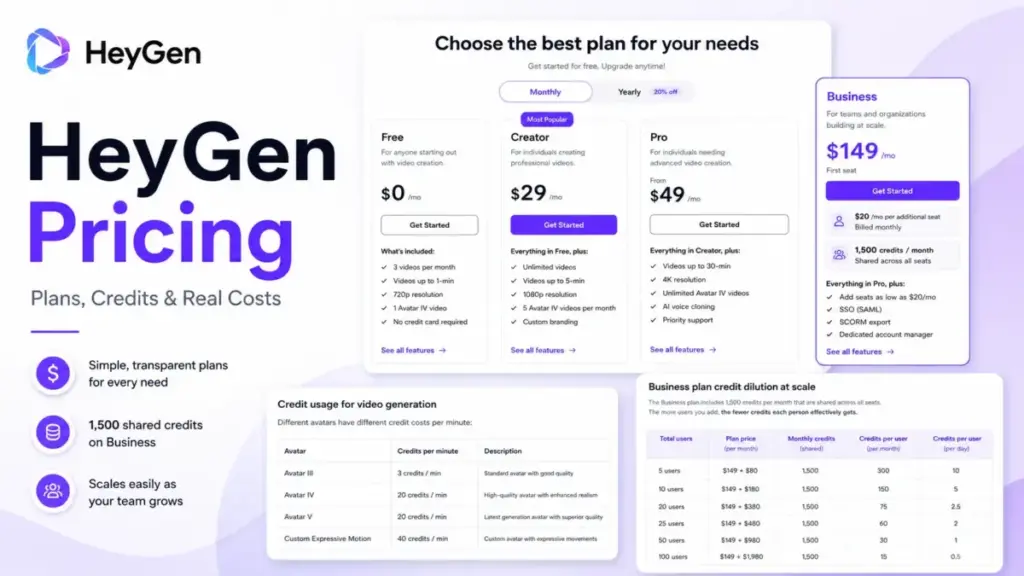
HeyGen pricing starts at $0 on the Free plan and runs to a custom Enterprise quote, but the sticker price on the plan card is not the number that decides your bill.
Your real HeyGen cost is set by credits, by which avatar model you pick, and by how many people share one pool of credits. A team can sign up at $149 a month and still run out of usable video by the second week.
That gap between the advertised price and the working price is what this guide fixes. I am Daniel Rivera, and I cover AI tools and generative AI at SaaS Zap, where the question is rarely “what does the plan cost” and almost always “what does the plan actually let me produce.”
HeyGen sits in the same category as the best AI video generator tools, and like most of them, it prices on usage you cannot see from the homepage.
Here is the part most pricing pages skip: on HeyGen Business, adding a teammate costs $20 a month and adds zero credits. Ten people share the same 1,500 credits one person would have had. By the end of this guide you will know exactly when that math breaks.
Quick Pricing Verdict
| Question | Answer |
|---|---|
| Starting price | $0 (Free plan, ongoing) |
| Cheapest paid plan | $29/mo Creator ($24/mo billed annually) |
| Free plan or trial | Free plan, no credit card, capped at 3 videos/month |
| Best plan for most solo creators | Creator at $29/mo for 600 credits |
| Best plan for teams | Business at $149/mo first seat, for SSO, SCORM, and shared workspaces |
| Plan to avoid | Business bought only to add seats, since extra seats add no credits |
| Biggest hidden cost | Credit burn from Avatar IV/V at 20 credits per minute |
| Best alternative if too expensive | Synthesia or Colossyan for minute-based team pricing |
| Pricing verified | June 2026, from the official HeyGen pricing page |
What this means: HeyGen is cheap to start and predictable for one person who watches their credits. The cost surprises arrive when a team shares credits or when users default to the newest, most expensive avatar models.
The Advertised Price vs The Real Price
The advertised price is the monthly plan fee. The real price is the plan fee plus the credits you burn faster than you expect, plus any seats or top-ups you add. HeyGen prices nearly everything in credits, and credits convert to minutes of video at very different rates depending on what you generate.
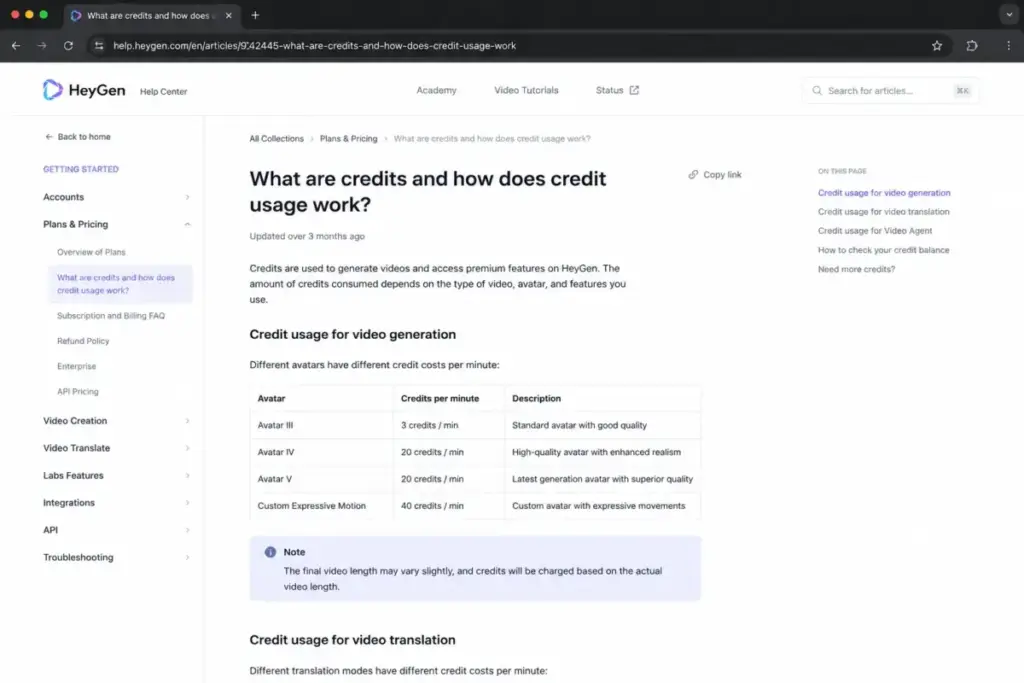
A credit is the working unit, not the dollar. Avatar III costs 3 credits per minute. Avatar IV and Avatar V cost 20 credits per minute, which is more than six times higher. Custom Expressive Motion runs 40 credits per minute. Video translation ranges from 2 to 10 credits per minute by mode, and the Video Agent costs 20 credits per minute.
This is why two people on the same Creator plan get wildly different output. Run everything on Avatar III and 600 credits buys roughly 200 minutes of video. Switch to Avatar IV or V and the same 600 credits buys about 30 minutes. Same plan, same price, a 6.6x difference in usable output.
| Plan | Advertised price | What you assume you get | What the real constraint is |
|---|---|---|---|
| Free | $0 | “Free AI video” | 3 videos/month, 1-minute cap, watermark stays |
| Creator | $29/mo | “600 credits of video” | 30 min on Avatar IV/V, 200 min on Avatar III |
| Pro | from $49/mo | “1,000 credits and 4K” | 50 min on Avatar IV/V before you pay more |
| Business | $149/mo | “A team plan” | 1,500 credits split across every seat you add |
What this means: read HeyGen pricing in minutes, not dollars or credits. The plan fee tells you almost nothing until you decide which avatar model your team will actually use day to day.
The Five Hidden Costs Nobody Mentions
HeyGen has five cost traps that the plan cards do not surface. Each one hits a different buyer, and each one is avoidable once you know it exists. This is the section most competing pricing pages skip entirely.
1. Business seats cost money but add no credits
Adding a Business seat costs $20 per seat per month and adds zero credits to the pool. The 1,500 monthly credits stay fixed no matter how many people you invite. A two-person Business account and a ten-person Business account draw from the identical 1,500-credit bucket.
So credits per person collapse as the team grows. One seat gets the full 1,500. Five seats get 300 each. Ten seats get 150 each. The plan that looks built for teams quietly punishes larger ones unless you buy top-ups.
2. The newest avatar models burn credits fastest
Avatar IV and Avatar V are the models HeyGen markets hardest, and they cost 20 credits per minute versus 3 credits per minute for Avatar III. Most new users click the default newest model without checking the rate. That single habit can cut a plan’s usable minutes by more than 80 percent.
3. Translation and dubbing have their own meter
Video translation is not free minutes. Standard video translation runs 5 credits per minute and Precision Translation runs 10 credits per minute, while no-lip-sync dubbing costs 2 credits per minute. A localization team translating one 10-minute video into several languages can spend hundreds of credits before producing a single original avatar video.
4. Creator and Pro cannot buy one-time credit packs
Only Business users can buy extra credits, at $0.05 per credit in 100-credit blocks with a $5 minimum, plus auto-reload. Creator and Pro users have no one-time top-up option. If you exhaust your Creator credits mid-month, your only move is to upgrade the whole plan or tier, not buy a small overage.
5. API usage is billed completely separately
The HeyGen API does not draw from your web subscription. It uses a standalone pay-as-you-go wallet, it does not require Creator, Pro, or Business, and HeyGen stopped offering free API credits in February 2026. Developers who assume their $149 Business plan covers API calls get a separate bill on a separate meter.
What this means: the dangerous costs on HeyGen are not on the pricing page. They live in the credit rates, the seat math, and the API wallet, and they hit teams, localizers, and developers hardest.
Plan-by-Plan Breakdown
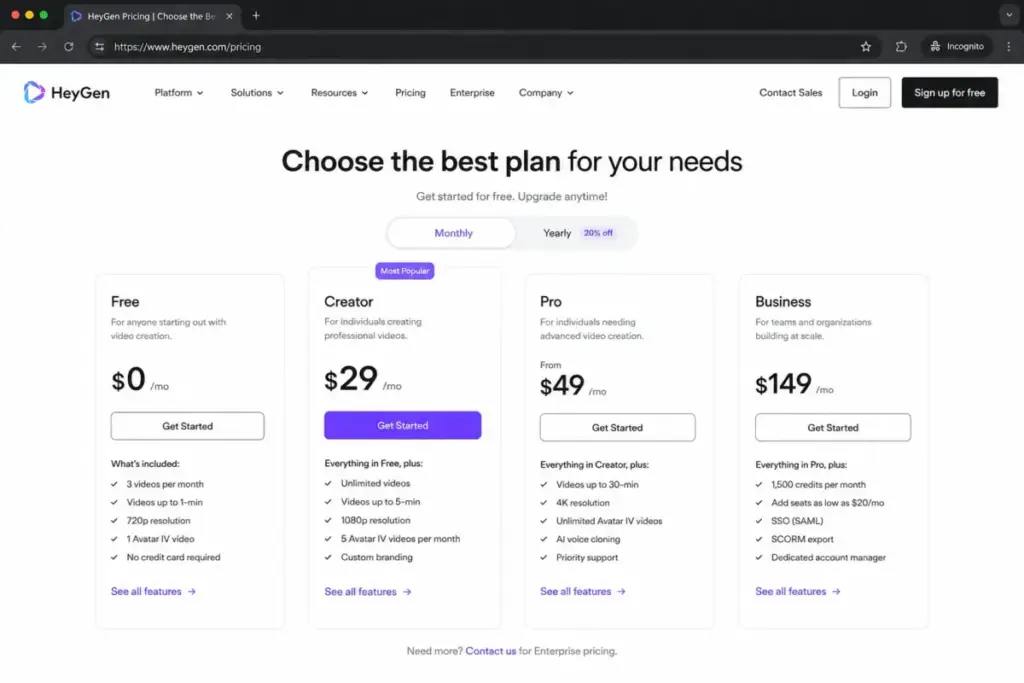
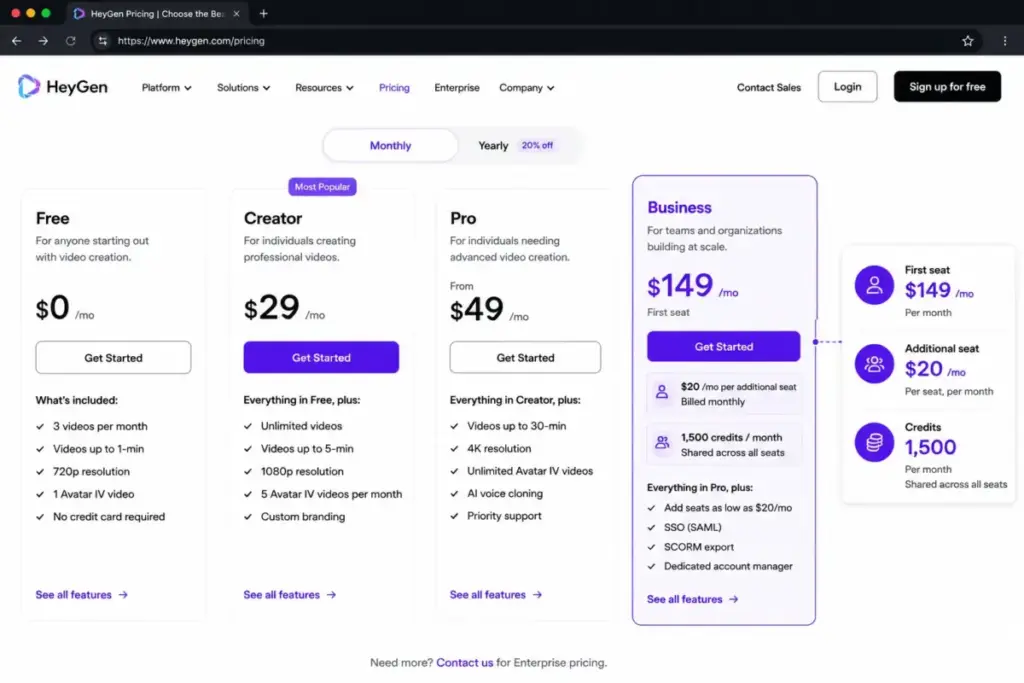
HeyGen runs four public plans plus a custom Enterprise tier (as of June 2026). Each plan changes the credit allocation, the maximum video length, the export quality, and the admin controls. The legacy Team plan was deprecated in January 2026 and is not part of the current new-buyer lineup. These figures were verified against the official pricing page in June 2026, so confirm the live page before you buy, since credit-based pricing can shift. HeyGen sits inside the broader category of AI tools for content and video, and like most of them it lists features per page without showing the credit cost behind them.
| Plan | Monthly | Annual | Billing basis | Best for |
|---|---|---|---|---|
| Free | $0 | $0 | Flat, no credits | Testing the product |
| Creator | $29/mo | $24/mo ($288/yr) | Per account, 600 credits | Solo regular output |
| Pro | from $49/mo | Annual available | Per account, 1,000+ credits | 4K and higher volume |
| Business | $149/mo first seat + $20/seat | $1,428/yr first seat + $240/seat | Per seat, 1,500 shared credits | Teams needing SSO and SCORM |
| Enterprise | Custom | Custom | Negotiated | Governance and large orgs |
What this means: the jump that matters is not Free to Creator, it is Pro to Business. That step adds collaboration and security but changes the billing model from per-account to per-seat with a shared credit pool.
Free: a real free plan with hard limits
Free is genuinely free and ongoing, with no credit card required. It includes up to 3 videos per month, a 1-minute maximum length, access to 500+ stock Digital Twins, one custom Digital Twin, and 30+ languages on standard processing. The watermark stays and export options are limited. It is a test bench, not a production tool.
Creator: the best value for one person
Creator at $29/mo (or $24/mo annually, $288/year) is the plan most solo marketers should buy. It includes 600 credits per month, 30-minute videos, 1080p export, watermark removal, voice cloning, 175+ languages, and credit rollover. The catch is the lack of one-time credit packs, so heavy months force a tier change rather than a small overage.
Pro: pay more for 4K and headroom
Pro starts at $49/mo for 1,000 credits and scales by usage tier up to 100,000 credits for $4,300/mo with the same feature set. It adds 4K export and faster processing over Creator. Annual billing exists, but HeyGen did not itemize every Pro annual tier publicly, so confirm the exact annual rate at checkout for your chosen credit tier.
Business: the team plan with the seat trap
Business is $149/mo for the first seat plus $20/seat/mo for each additional seat, or $1,428/year first seat plus $240/year per added seat. It includes 1,500 shared credits, 60-minute videos, 4K, roughly 2x the concurrency of Pro, SAML/SSO, SCORM export, LMS integrations, and team collaboration. HeyGen positions it for teams with pooled credits and role-based access, and references SOC 2 Type II, GDPR, CCPA, and Data Privacy Framework coverage. Just remember the credit pool does not grow with the team.
Enterprise: custom, and quiet about the number
Enterprise is custom-priced and requires a sales quote. It adds SCIM provisioning, multi-workspace controls, team MFA enforcement, the highest concurrency, no public maximum video duration, priority support, a dedicated CSM, tailored onboarding, and invoice billing. HeyGen does not publish the price, seat minimums, or onboarding fees, so treat any specific Enterprise figure you see elsewhere as unverified.
When the Free Plan Stops Working
The Free plan stops working the moment you need a watermark-free video longer than one minute, or more than three videos in a month. Those three limits, taken together, rule out nearly every real use case beyond a quick test.
The watermark is the first wall for anyone publishing to clients or social. The 1-minute cap is the second, since most explainers, training clips, and product demos run longer. The 3-video monthly limit is the third, and it disqualifies any consistent content schedule.
There is no free API allotment anymore either. HeyGen ended free API credits in February 2026, so developers cannot prototype on the API for free the way they once could. For a team, the honest read is that Free validates whether you like the avatars, then Creator or Business becomes the working plan within days.
What this means: budget for a paid plan from the start if you publish anything. The Free plan answers “do I like this,” not “can I run my workflow on this.”
Real Cost Scenarios: 5, 10, and 20+ Users
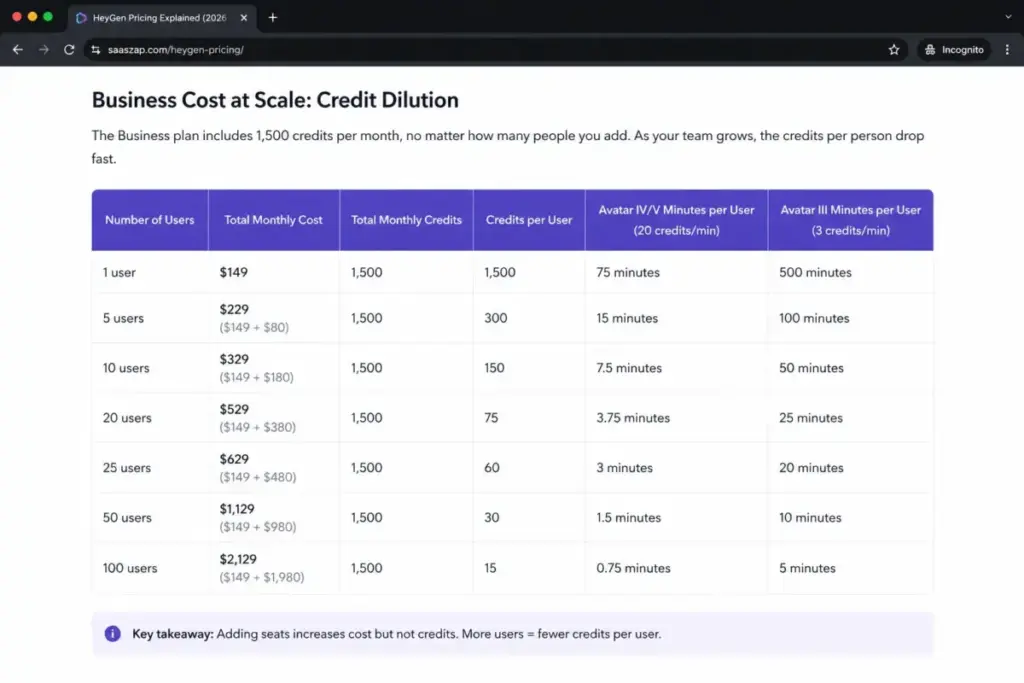
HeyGen team cost scales cleanly by seat, but usable credits per person shrink fast because the 1,500-credit pool never grows. Below is the Business math at five team sizes, with credits per user before any top-ups (as of June 2026).
| Team size | Monthly cost | Annual cost | Credits per user | Reality check |
|---|---|---|---|---|
| 5 users | $229/mo | $2,388/yr | 300 | About 15 min/user on Avatar IV/V |
| 10 users | $329/mo | $3,588/yr | 150 | About 7.5 min/user on Avatar IV/V |
| 20 users | $529/mo | $5,988/yr | 75 | About 3.75 min/user on Avatar IV/V |
| 25 users | $629/mo | $7,188/yr | 60 | About 3 min/user; budget top-ups |
| 50 users | $1,129/mo | $13,188/yr | 30 | About 1.5 min/user; evaluate Enterprise |
| 100 users | $2,129/mo | $25,188/yr | 15 | About 0.75 min/user; Enterprise territory |
What this means: at 100 users on the public Business plan, each person gets 15 credits a month, which is roughly 45 seconds of Avatar IV video. No active team runs on that. Past about 25 active creators, you are either buying steady top-ups at $0.05 a credit or moving to a custom Enterprise credit agreement. The seat fee is the visible cost. The credit dilution is the real one.
Monthly vs Annual Billing
Annual billing saves the most on Creator and on the Business first seat, and almost nothing on extra Business seats. The discounts are real but uneven, so the savings depend entirely on which line item you are paying for.
Creator drops from $29/mo to $24/mo on annual, about 17 percent off. The Business first seat falls from $149/mo to an effective $119/mo ($1,428/year), about 20 percent off. But extra Business seats are $240/year, which equals exactly $20 a month, so there is no annual discount on additional seats at all.
There is a billing nuance buyers miss. Annual subscribers do not receive all 12 months of credits upfront. Credits recharge monthly and accumulate until your annual renewal, and unused monthly credits roll over for one billing cycle. If you cancel and downgrade to Free, unused credits do not carry over.
What this means: pay annually for Creator or the Business core seat to capture the discount. Do not expect annual billing to discount extra seats, and do not treat an annual plan as a lump pile of credits you can spend anytime.
Which HeyGen Plan Should You Choose?
Choose by your production pattern, not by team size alone. HeyGen rewards buyers who match the plan to how they actually generate video, and punishes buyers who pick the team plan for the wrong reason.
Pick Free if you only need to test the avatars and output quality before committing. Pick Creator if you are a solo marketer or course creator producing regular short to mid-length videos and you can live without 4K. Pick Pro if you are still a solo or small operator but need 4K export or more than 1,000 credits a month.
Pick Business if your team needs SAML/SSO, SCORM export, LMS integrations, shared workspaces, and centralized billing, and you accept buying top-ups as the team grows. Pick Enterprise if you need SCIM, MFA enforcement, multi-workspace governance, or a custom credit volume that public Business cannot supply.
There is a sixth path. If your use case is automated, programmatic generation through n8n, Make, or your own backend, the API wallet may be the right buy on its own, independent of any web plan.
What this means: the cleanest decision rule is output type first, governance second. Solo regular output points to Creator, 4K points to Pro, security and LMS point to Business, and automation points to the API.
Which HeyGen Plan Should You Avoid?
Avoid the Business plan if your only reason for it is adding more users. Business is poor value for any team that wants extra editors or viewers but does not need SSO, SCORM, LMS integrations, or workspace controls, because every added seat costs $20 a month and adds no credits.
The trap is real for a specific buyer: a 10-person team that wants everyone to have a login but produces a low, shared volume of video. That team pays $329/mo for 1,500 credits split ten ways. The same 1,500 credits cost one Creator-style buyer far less per credit.
The exception: if that 10-person team genuinely needs single sign-on, SCORM training exports, or audited workspace access, Business earns its price through security and compliance, not through credits. Buy Business for the controls, never for the seats alone.
What this means: if you cannot name a security, compliance, or workspace feature you need from Business, you are probably overpaying. The seat fee is not buying you more video.
HeyGen Pricing vs Competitors
HeyGen looks cheap or expensive depending on the unit you compare, because rivals price by editors and video minutes while HeyGen prices by credits. A fair comparison normalizes those units instead of lining up sticker prices. For a deeper look at one rival, see our Synthesia pricing breakdown.
| Tool | Starting price | Billing unit | Free plan | 10-user note |
|---|---|---|---|---|
| HeyGen | $29/mo Creator | Credits, per account; Business per seat | Yes | $329/mo Business, 1,500 shared credits |
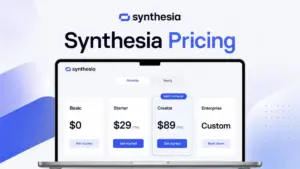
| Synthesia | $29/mo ($18 annual) Starter | Per editor + video minutes | Yes | Shared 10-editor self-serve price not public |
| Colossyan | $27/mo ($19 annual) Starter | Per editor + video minutes | Yes | Business editor counts limited; 10 may need Enterprise |
| Elai.io | $29/mo ($23 annual) Creator | Editor seats + video minutes | Yes | Team includes 3 editors; 10 likely needs Enterprise |
| D-ID | ~$5.90/mo (~$4.70 annual) Lite | Plan-based credits/minutes | Yes, 14-day trial | 10 separate Lite plans ~$59/mo; shared pricing unconfirmed |
What this means: HeyGen is the only one of these that pools credits and charges flat per seat on its team plan. That helps small teams who share a workload and hurts large teams who each need their own volume. Synthesia and Colossyan price closer to per-editor minute models, which can be more predictable for bigger teams. D-ID pricing here is corroborated from app-store and third-party sources because its Studio plan cards were not fully extractable, so treat that row as the least verified.
Is HeyGen Worth the Price?
HeyGen is worth it for solo creators and predictable-volume teams, and not worth it for teams that need many seats but little video. The deciding factor is whether you can forecast your monthly credit use and stick to a credit-efficient avatar model.
It is worth it if you are a solo marketer, course creator, sales enablement lead, or localization specialist who produces a steady stream of avatar video and can plan credits around Avatar III for volume work. Reviewer patterns on platforms like G2 show strong overall satisfaction alongside recurring complaints about how fast credits disappear, which lines up exactly with the credit-burn math above.
It is not worth it if you need unlimited casual seats with simple minute-based pricing, if you want extra users more than extra video, or if you are a developer expecting API usage to be bundled into a web plan. Those buyers either overpay on seats or get blindsided by the separate API wallet.
What this means: HeyGen’s pricing is honest once you understand credits, and frustrating if you do not. The product is good. The plan and model you choose decide whether it feels affordable.
How to Avoid Overpaying for HeyGen
Most HeyGen overspending comes from defaults, not from the plan fee. Five habits keep your bill matched to your output.
First, default to Avatar III at 3 credits per minute for high-volume work and reserve Avatar IV or V for hero videos. That single choice can multiply your usable minutes by six. Second, pay annually for Creator and the Business core seat to capture the 17 to 20 percent discount, but do not expect a discount on extra seats.
Third, do not buy Business for seats alone. If you only need more logins and not SSO, SCORM, or workspace controls, the $20 seat fee buys you nothing in video. Fourth, if you run automated generation, price the API wallet separately and compare it against web-plan credits before assuming the subscription covers it. Learn what an API actually is if your team is weighing that path.
Fifth, watch translation modes. Standard translation at 5 credits per minute is far cheaper than Precision Translation at 10, so match the mode to the quality you truly need. Understanding how generative AI video works under the hood helps you predict which features cost the most.
What this means: the plan is rarely the problem. Model choice, seat discipline, billing cycle, and translation mode are where HeyGen budgets are won or lost.
FAQ
How much does HeyGen cost per month?
HeyGen costs $0 on the Free plan, $29/mo on Creator, from $49/mo on Pro, and $149/mo for the first Business seat plus $20 per additional seat (as of June 2026). Enterprise is custom-priced. Annual billing lowers Creator to about $24/mo and the Business core seat to an effective $119/mo. Your true cost also depends on credit usage and any top-ups.
Does HeyGen charge per user?
HeyGen charges per account on Free, Creator, and Pro, and per seat only on Business at $20 per additional seat per month. Those extra Business seats do not add any credits to the shared 1,500-credit pool. So adding users raises your fee without raising your usable video, which is the single most overlooked detail in HeyGen team pricing.
Why do my HeyGen credits run out so fast?
Credits usually disappear fast because of the avatar model you pick. Avatar IV and Avatar V cost 20 credits per minute, while Avatar III costs only 3 credits per minute. Translation, dubbing, and the Video Agent also draw credits separately. On a 600-credit Creator plan, Avatar IV gives roughly 30 minutes, where Avatar III would give about 200.
Can I buy extra credits on HeyGen Creator?
No. Only Business users can buy one-time extra credits, at $0.05 per credit in 100-credit blocks with a $5 minimum, plus auto-reload. Creator and Pro users have no top-up option and must upgrade their plan or tier to get more credits. Plan accordingly if you expect occasional overage, because a mid-month shortfall on Creator forces a full upgrade.
Is HeyGen API billed separately from the web plan?
Yes. The HeyGen API uses a separate pay-as-you-go wallet and does not require a Creator, Pro, or Business subscription. API examples include Avatar III from $1/min, Avatar IV from $3 to $5/min, Video Agent at $2/min, and translation from $1 to $4/min. HeyGen ended free API credits in February 2026, so all API usage now carries a charge.
Do HeyGen credits roll over?
Unused monthly credits roll over for one billing cycle. On annual plans, credits recharge monthly and accumulate until your annual renewal rather than arriving all at once. If you cancel and downgrade to the Free plan, unused credits do not roll over. So annual is a discount on price, not a license to bank a full year of credits and spend them whenever you like.
Which HeyGen plan has SSO?
SAML/SSO starts on the Business plan at $149/mo for the first seat. Business also adds SCORM export and LMS integrations. SCIM provisioning and team MFA enforcement are reserved for the custom Enterprise tier. If your security team requires SCIM or enforced MFA across the org, plan for an Enterprise quote rather than self-serve Business.
How much does HeyGen cost for 10 users?
Ten users on Business costs $329/mo, which is the $149 first seat plus nine seats at $20 each. That price includes 1,500 shared credits, equal to about 150 credits per user before top-ups. For active video teams that volume is thin, so budget extra credits at $0.05 each or evaluate a custom Enterprise agreement for higher pooled credits.
The Bottom Line on HeyGen Pricing
HeyGen pricing is simple to read and easy to misjudge. The plan cards are honest, the discounts are real, and the Free plan is a true ongoing tier, but none of that tells you the working cost. Credits, avatar model choice, and shared-seat dilution decide what you actually pay per usable minute of video.
For one person with steady output, Creator at $29/mo is strong value and the credit math stays predictable. For teams, Business earns its $149 base only when you need SSO, SCORM, and governance, not when you simply want more logins. And anyone building automated workflows should price the API wallet on its own. Match the plan to your production pattern, default to credit-efficient models, and HeyGen pricing stops surprising you.