Midjourney markets itself as the easiest path to polished AI images. Stable Diffusion markets itself as the most flexible. Both claims are true, and both claims hide real tradeoffs that show up only after you commit. Choose Midjourney if your team needs fast, high-quality visuals from a managed prompt-to-image workflow with zero GPU planning. Choose Stable Diffusion if your team needs API automation, self-hosted deployment, model fine-tuning, or full control over image generation infrastructure. The right pick depends on whether you would rather pay a predictable subscription or absorb hardware, API, and engineering costs in exchange for control. I mapped the best AI image generator tools across pricing, workflows, and deployment. This comparison covers the parts most 2026 articles skip: real cost at scale, plan-gated features, privacy limits, API access, licensing thresholds, and switching costs.
| Category | Winner | Why |
|---|---|---|
| Pricing and total cost | Tie | Stable Diffusion is free at the license layer for eligible users, but GPU, API, and labor costs add up. Midjourney costs more per seat but is easier to forecast. |
| Ease of use | Midjourney | Managed, prompt-based, polished defaults. No model selection or GPU setup. |
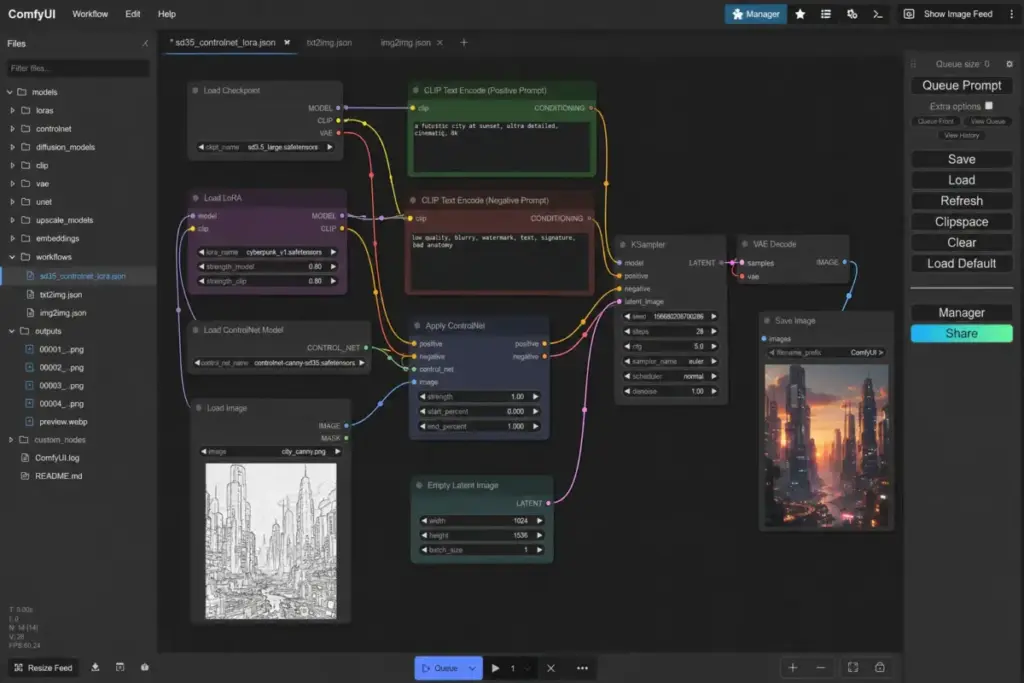
| Customization and workflow control | Stable Diffusion | Self-hosting, ComfyUI, fine-tuning, LoRA workflows, and custom pipelines. |
| Privacy and deployment control | Stable Diffusion | Local deployment keeps data internal. Midjourney Stealth Mode is Pro/Mega only and best-effort. |
| API and automation | Stable Diffusion | Stability Platform API and self-host automation. Midjourney has no verified public API. |
| Out-of-box visual polish | Midjourney | V8.1 default output is consistently strong without tuning. |
| Enterprise compliance | Stable Diffusion | SOC 2 Type II and SOC 3 compliance. Midjourney enterprise certifications not verified. |
What this means: Midjourney wins on ease and visual quality. Stable Diffusion wins on control, privacy, automation, and enterprise deployment. The tie on pricing is real, because “free” Stable Diffusion shifts costs into infrastructure and engineering time.
How We Compared Midjourney and Stable Diffusion
Daniel Rivera tested and evaluated over 30 AI tools since 2022, tracking pricing changes across 12 products monthly. This comparison uses official product documentation, official pricing pages, and SERP research as of June 2026. Testing level for both products: official research only. I did not run hands-on generation tests for this article.
Pricing was verified on June 22, 2026 from Midjourney’s official plan comparison and Stability AI’s license page. Every claim traces to these sources or to official product pages.
This comparison evaluates seven dimensions: pricing, ease of use, customization, privacy, API automation, visual quality, and enterprise readiness. Each dimension names a winner. Where the winner depends on buyer type, I say so and specify who benefits.
Review limitation: This is a research-based comparison, not a hands-on test. Output quality claims reflect SERP consensus and official documentation, not controlled image generation benchmarks.
Workflow 1: Prompt-to-Image Speed and Polish
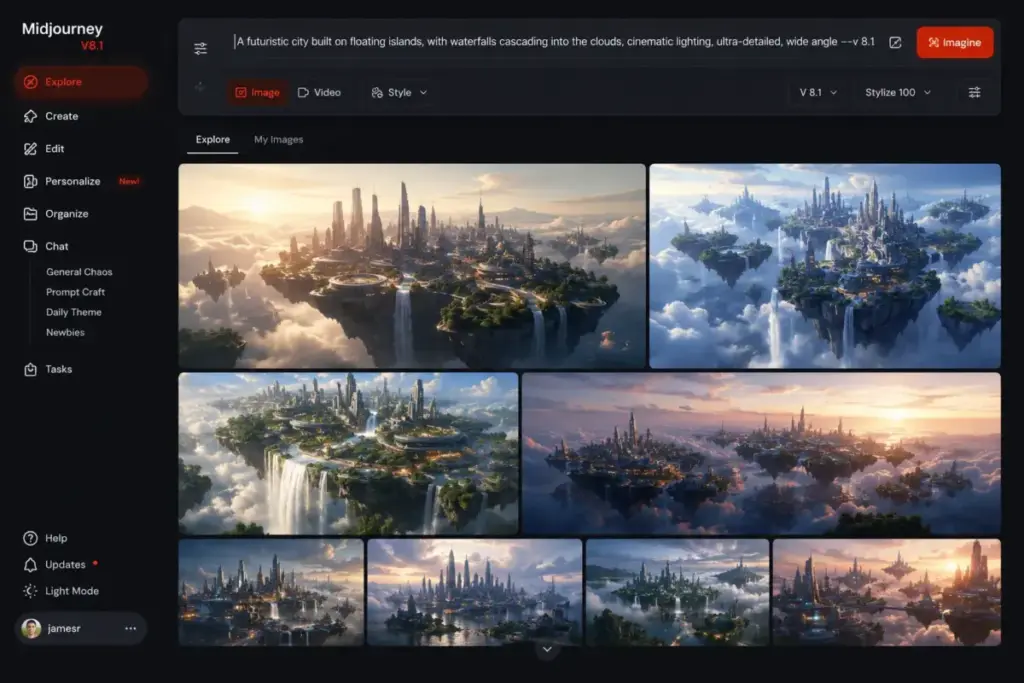
Midjourney wins for text-to-image AI generation speed and default output quality. Midjourney V8.1 (as of June 2026) handles prompts through a managed web app or Discord. Type a prompt, wait seconds, get a polished result. No model selection, no parameter tuning, no GPU provisioning.
Stable Diffusion 3.5 requires more decisions before the first image appears. Self-hosted users choose between Large, Large Turbo, and Medium variants. Each handles prompts differently. ComfyUI workflows add control but also add setup friction. API users get faster starts, but still choose endpoints and manage credits.
Where This Matters for Buyers
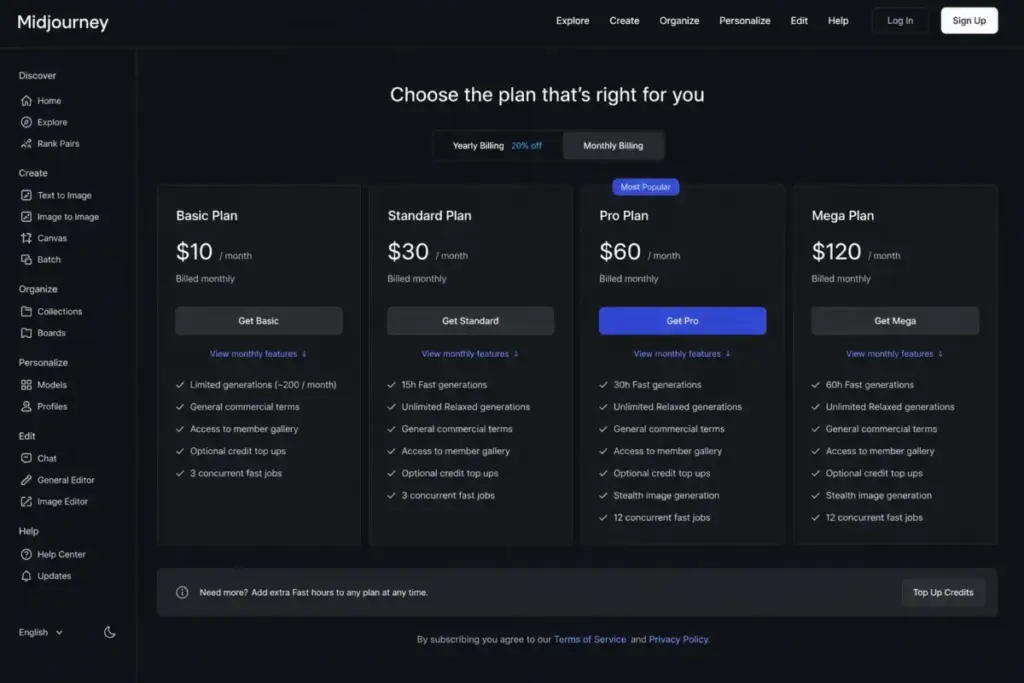
A solo creator producing 20 social media images per week hits Midjourney’s $10/month Basic plan, generates images in a browser, and moves on. The same creator on Stable Diffusion either rents cloud GPU time, invests in local hardware, or uses the API with credit-based billing. The images can be just as strong, but the path to the first result takes longer.
For a 5-person marketing team running weekly ad campaigns, Midjourney Standard at $30/month per user delivers $150/month with unlimited Relax image generation. That team gets predictable billing and no infrastructure overhead.
Workflow 2: Custom Pipelines and Automation
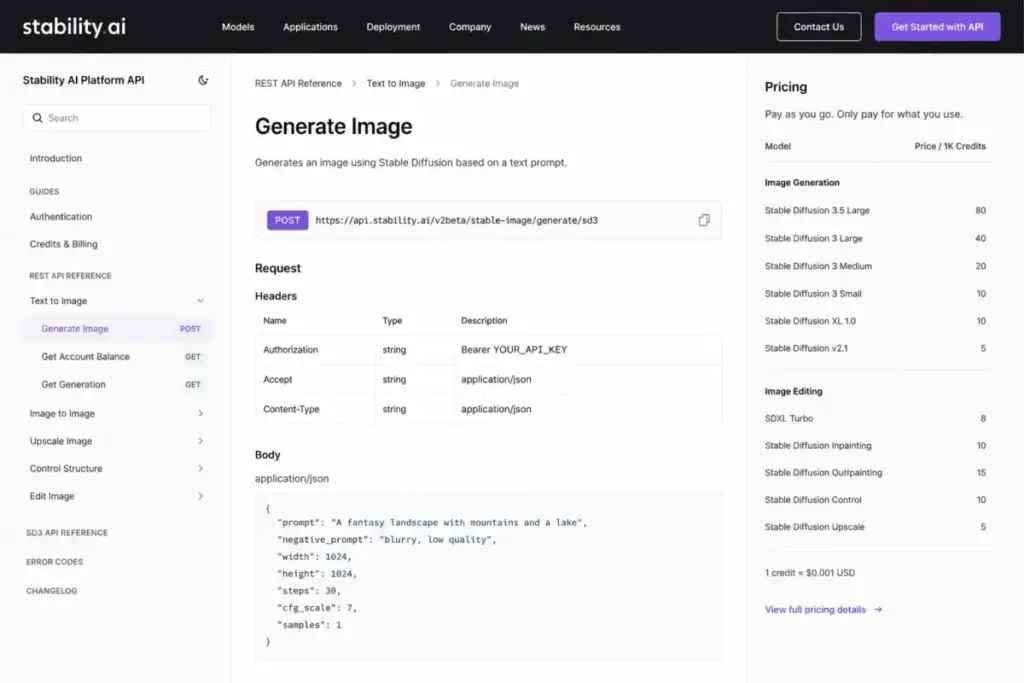
Stable Diffusion wins for teams that need programmatic image generation. The Stability Platform API accepts credit-based requests. Self-hosted deployments run on private infrastructure with no external API calls. ComfyUI, Automatic1111, and InvokeAI provide node-based and web-based interfaces for batch processing, LoRA loading, and ControlNet-style workflows.
Midjourney has no verified official public API as of June 2026. Midjourney’s terms prohibit automated tools for accessing, generating, or processing assets without permission. A 3-person development team building an automated product mockup pipeline cannot use Midjourney programmatically without violating terms.
The Plan-Gate Map: API and Automation Access
| Feature | Midjourney Plan Gate | Stable Diffusion Requirement | Buyer Impact |
|---|---|---|---|
| API access | No verified public API | Stability Platform API (credits) or self-host | Developers cannot automate Midjourney workflows |
| Batch generation | Manual prompt entry only | API or self-host pipeline | High-volume teams need Stable Diffusion |
| Custom models | Not supported | Fine-tuning, LoRA, model weights | Brand-specific output requires Stable Diffusion |
| ControlNet workflows | Not available | ComfyUI/Automatic1111 support | Precision control requires Stable Diffusion |
| Relax Mode (images) | Standard, Pro, Mega | N/A (self-paced on own hardware) | Midjourney Relax queues during peak times |
| Stealth Mode | Pro ($60/month) or Mega ($120/month) | Default on self-hosted | Privacy costs extra on Midjourney |
| HD image generation | All plans | Model and hardware dependent | Midjourney makes HD simple |
What this means: Midjourney locks automation out entirely. Stable Diffusion opens it up through API or self-hosting. Teams that need pipeline-level control have one real option here.
Workflow 3: Privacy, Deployment, and Data Control
Stable Diffusion wins for teams with privacy or deployment requirements. Self-hosted Stable Diffusion runs on local GPUs or private cloud infrastructure. Generated images, prompts, and model weights stay inside the organization’s network. No external API calls. No third-party data retention.
Midjourney operates as a managed cloud service. Images generated on Midjourney are subject to its terms, which grant Midjourney a broad license to user content. Public and remix defaults mean other users can see and build on generations unless you pay for Stealth Mode. Stealth Mode is available only on Pro ($60/month) and Mega ($120/month). Midjourney describes Stealth Mode as a best-effort feature. Images may still be visible in shared spaces like Discord channels.
Here is the thing. A privacy-sensitive product team designing unreleased hardware concepts faces real risk on Midjourney. Even with Stealth Mode, the terms describe broad content licensing and best-effort privacy. Self-hosted Stable Diffusion eliminates that risk at the infrastructure level.
Privacy Feature Comparison
For enterprise buyers evaluating both products, the compliance picture favors Stable Diffusion. Stability AI announced SOC 2 Type II and SOC 3 compliance (as of June 2026). Self-hosted deployment adds infrastructure-level data control. Midjourney does not publish SOC 2, SOC 3, ISO 27001, or HIPAA certifications in its accessible public documentation.
Midjourney vs Stable Diffusion Pricing Breakdown
Midjourney uses per-seat monthly subscriptions (as of June 2026). Stable Diffusion uses a licensing model with separate API credit-based pricing. The direct cost comparison is misleading without context, because the two products bill in completely different ways.
Midjourney Plans
| Plan | Monthly | Annual (per month) | Key Limits |
|---|---|---|---|
| Basic | $10/month | $8/month | 3.3 hrs Fast GPU, SD video, no Relax, no Stealth |
| Standard | $30/month | $24/month | 15 hrs Fast GPU, unlimited Relax images, no Stealth |
| Pro | $60/month | $48/month | 30 hrs Fast GPU, Stealth Mode, required for companies over $1M revenue |
| Mega | $120/month | $96/month | 60 hrs Fast GPU, highest concurrency, Stealth Mode |
Stable Diffusion Plans
| Plan | Price | Key Limits |
|---|---|---|
| Community License | Free | For researchers, developers, creators, and businesses under $1M revenue. Excludes hardware, cloud, API, and labor costs. |
| Enterprise License | Custom (contact sales) | Required for organizations over $1M annual revenue |
| Stability Platform API | Usage-based credits | 1 credit = $0.01. 25 free credits may be available. Per-model costs vary. |
Cost at Scale: Midjourney vs Stable Diffusion
| Team Size | Midjourney Standard | Midjourney Pro | Stable Diffusion License | Caveat | Winner |
|---|---|---|---|---|---|
| 5 users | $150/month | $300/month | $0/month (if eligible) | SD excludes hardware, cloud, API, engineering | Tie: B on license, A on managed cost |
| 10 users | $300/month | $600/month | $0/month (if eligible) | SD infrastructure costs scale with usage | Depends on technical capacity |
| 25 users | $750/month | $1,500/month | $0/month (if eligible) | SD may need dedicated GPU cluster at this scale | Depends on total infrastructure spend |
| 50 users | $1,500/month | $3,000/month | $0/month or Enterprise License | Enterprise License likely required above $1M revenue | A for managed teams, B for technical teams |
What this means: Midjourney is more expensive on paper at every team size. But Stable Diffusion’s $0 license cost hides GPU hardware (a capable card starts around $800–$1,500), cloud GPU hourly rates, API credits, developer setup time, and ongoing maintenance. A 10-person team self-hosting Stable Diffusion on a single dedicated GPU server realistically spends $200–$500/month on compute alone, before engineering labor. At that point, the cost gap with Midjourney Standard ($300/month) is much smaller than it appears.
Hidden Costs
Midjourney hidden costs: Extra Fast GPU time at $4/hour. Pro or Mega required for Stealth Mode. Pro or Mega required for complete commercial usage rights if annual gross revenue exceeds $1M. One account should not be shared across users under the terms. No verified public API forces manual prompt workflows.
Stable Diffusion hidden costs: GPU hardware purchase or cloud rental. API credits scale with volume. Developer setup time for ComfyUI, model configuration, and workflow automation. Model tuning and LoRA training consume GPU hours. Storage for model weights (multiple GB per model). Enterprise License costs if organization revenue exceeds $1M.
Setup and Migration Difficulty
| Dimension | Midjourney | Stable Diffusion |
|---|---|---|
| Time to first image | Minutes | Hours to days (self-hosted) or minutes (API) |
| Technical skill required | Low (browser or Discord) | Medium-high (self-host) or medium (API) |
| Infrastructure needed | None (managed cloud) | GPU hardware or cloud GPU (self-host) or API key (API) |
| Workflow learning curve | Low-medium (prompt crafting) | Medium-high (ComfyUI, model selection, LoRAs) |
| Migration from Midjourney | N/A | Must rebuild prompts, style references, and workflows from scratch |
| Migration from Stable Diffusion | Loses LoRAs, custom models, pipelines, and self-hosted control | N/A |
| Team onboarding | Simple (share account invites) | Complex (deploy infrastructure, train operators) |
What this means: Moving from Midjourney to Stable Diffusion is a medium-to-high difficulty migration. You rebuild everything: prompts, reference systems, model choices, and deployment infrastructure. Moving from Stable Diffusion to Midjourney is medium difficulty. You lose fine-tuning, custom nodes, self-hosting, and API automation, but gain simplicity.
Where Midjourney Wins
Default visual quality without tuning. Midjourney V8.1 produces polished, visually appealing images from simple prompts. Reviewers across SERP sources consistently describe Midjourney as the faster path to attractive output. Stable Diffusion can match or exceed Midjourney quality, but it takes more model selection, prompt engineering, and workflow configuration.
Speed to first result for non-technical users. A marketer, founder, or content creator opens the Midjourney web app, types a prompt, and gets results. No hardware decisions. No model downloads. No terminal commands.
Predictable monthly billing. Midjourney bills $10–$120/month per user. Budget planning is simple. There is no GPU cost variance, no credit burn rate to monitor, and no infrastructure scaling decisions.
Editing and remix workflow. Midjourney Editor supports inpainting, panning, zooming, and remixing. Omni Reference works on compatible models. Personalization and moodboards help maintain visual consistency across sessions.
Where Stable Diffusion Wins
Full model-level control. Stable Diffusion supports fine-tuning, LoRA training, custom model variants, and ControlNet-style workflows. A technical creative studio producing consistent brand characters across hundreds of images needs this level of control. Midjourney offers prompt-based personalization but not model-level customization.
Private deployment. Self-hosted Stable Diffusion keeps all prompts, images, and model weights on internal infrastructure. No cloud provider sees the data. No terms of service grant a third party a license to generated content.
API and batch automation. The Stability Platform API and self-hosted endpoints support programmatic image generation. Custom pipelines handle batch processing, scheduled generation, and integration with existing product workflows. Midjourney’s lack of a verified public API blocks every automation use case.
Licensing flexibility for eligible users. The Stability AI Community License is free for creators, researchers, developers, and businesses under $1M annual revenue (as of June 2026). No subscription required. No per-seat charge. The costs shift to infrastructure and labor, not license fees.
Ecosystem breadth. ComfyUI, Automatic1111, InvokeAI, Hugging Face model hosting, and cloud deployments through AWS Bedrock and Azure AI Foundry give Stable Diffusion users multiple deployment paths. Midjourney runs through its own web app and Discord only.
Choose Midjourney If
- You are a solo creator or small marketing team that needs polished visuals fast. Midjourney Basic at $10/month or Standard at $30/month covers most creative use cases without infrastructure work.
- You run an agency producing campaign concepts for clients. Midjourney’s default aesthetic quality and low setup time make it efficient for moodboards, ad concepts, and client presentations.
- Your team lacks technical resources for GPU provisioning, model selection, or workflow maintenance. Midjourney is a managed service. You pay and create.
- You need HD images and quick editing without configuring separate tools. Midjourney Editor handles inpainting, panning, and remixing in a single interface.
Choose Stable Diffusion If
- You are a developer building an automated image pipeline. API access and self-hosting make Stable Diffusion the only viable option for programmatic generation at scale.
- Your team handles confidential product concepts or sensitive visual assets. Self-hosted deployment gives infrastructure-level privacy that Midjourney’s best-effort Stealth Mode cannot match.
- You need consistent brand characters or fine-tuned visual styles. LoRA workflows and model fine-tuning produce repeatable, controlled output that prompt-based systems cannot guarantee.
- Your organization needs SOC 2 compliance or enterprise procurement documentation. Stability AI publishes SOC 2 Type II and SOC 3 compliance. Midjourney does not publish equivalent certifications in its accessible documentation.
- You are under $1M annual revenue and have technical capacity. The Community License eliminates licensing costs. Your real investment is hardware, setup time, and workflow expertise.
When to Skip Both and Look at Alternatives
Not every team fits Midjourney or Stable Diffusion. If your team needs brand-safe enterprise creative production with built-in collaboration approvals and licensed stock workflows, evaluate other options. If your primary output is social media graphics, presentation slides, or templated marketing assets, a design platform with built-in AI may be more practical than a dedicated image generator.
Consider these alternatives:
| Alternative | Best For | Why Consider It |
|---|---|---|
| Adobe Firefly | Enterprise creative teams needing design-suite integration | Brand governance, Adobe ecosystem, commercial licensing built in |
| Canva AI | Non-design teams producing social posts, slides, and ads | AI image generation inside a broader design and publishing workflow |
| Ideogram | Users who need strong text rendering in AI images | Better text-in-image accuracy than Midjourney or Stable Diffusion |
What this means: If your deliverable is a finished social media post or a branded slide deck rather than a raw generated image, Canva AI or Adobe Firefly may save your team time compared to generating images in Midjourney or Stable Diffusion and then importing them into a design tool.
Read the Adobe Firefly review for a full breakdown of Adobe’s AI image tooling.
For a closer look at Canva’s built-in AI generator, see the Canva AI analysis.
Final Verdict: Midjourney vs Stable Diffusion in 2026
The Midjourney vs Stable Diffusion decision is not about which tool generates better images. It is about which tradeoff your team can absorb.
Midjourney is the right choice for teams that value speed, polish, and managed simplicity. A 5-person marketing team at $150/month on Standard gets unlimited Relax image generation, HD output, editing tools, and zero infrastructure overhead. The limitations are real: no API automation, best-effort privacy, broad content licensing, and plan-gated features like Stealth Mode.
Stable Diffusion is the right choice for teams that value control, privacy, and technical flexibility. A 3-person development team self-hosting on a dedicated GPU gets full model control, private deployment, batch automation, and no per-seat licensing (if under $1M revenue). The costs are also real: hardware investment, setup complexity, ongoing maintenance, and a steeper learning curve.
For a deep dive into Midjourney’s plan gates and feature limits, see the Midjourney evaluation.
For Stable Diffusion’s deployment options and model variants, read the Stable Diffusion assessment.
If your team is comparing Midjourney against other paid generators, the Midjourney vs DALL-E comparison covers that specific matchup.
For a broader view of options if Midjourney does not fit, see the top Midjourney alternatives guide.
Pricing breakdown with plan details: Midjourney pricing guide.
For Stable Diffusion costs and API credit structure, check the Stable Diffusion cost breakdown.
FAQ
Is Midjourney better than Stable Diffusion for beginners in 2026?
Yes, if you want fast results without technical setup. Midjourney Basic costs $10/month and works in a browser. No GPU, no model selection, no terminal commands. Stable Diffusion API is accessible for developers, but self-hosting requires hardware, model downloads, and workflow configuration that most non-technical users find frustrating.
Is Stable Diffusion actually free after GPU and cloud costs?
No. The Stability AI Community License is free for qualifying users under $1M annual revenue. But self-hosting requires a GPU (starting around $800–$1,500 for a capable card), electricity, storage, and setup time. Cloud GPU hosting adds $0.50–$3.00+ per hour depending on provider and instance. API usage charges credits. The license is free. The total cost of ownership is not.
Can I use Midjourney images commercially for client work?
Yes, with conditions. Midjourney grants commercial usage rights on paid plans. But companies with annual gross revenue exceeding $1M need Pro ($60/month) or Mega ($120/month) for complete company usage rights. Midjourney’s terms also grant Midjourney a broad license to user content. Review the terms carefully before using generated images for sensitive client projects.
Does Midjourney have an API for automated image generation?
No verified official public API was found in Midjourney’s documentation as of June 2026. Midjourney’s terms prohibit automated tools for accessing, generating, or processing assets without permission. Teams that need programmatic image generation should evaluate Stable Diffusion’s API or self-hosted deployment instead.
Which is better for consistent characters across a project?
Stable Diffusion, if your team has the technical capacity. LoRA workflows and fine-tuned models produce repeatable character appearances across hundreds of generations. Midjourney offers personalization and Omni Reference on compatible models, but these are prompt-based rather than model-based. Prompt-based consistency is good but not as controllable as fine-tuned models.
Is Midjourney Stealth Mode fully private?
Not entirely. Stealth Mode is available only on Pro ($60/month) and Mega ($120/month). Midjourney describes it as a best-effort feature. Images may still be visible in shared spaces like Discord channels. For teams handling confidential visuals, self-hosted Stable Diffusion provides stronger privacy at the infrastructure level.
What happens if my company earns over $1M using Midjourney?
Companies with annual gross revenue exceeding $1M need Midjourney Pro or Mega for complete company usage rights. On the Stable Diffusion side, organizations over $1M revenue must contact Stability AI for an Enterprise License. Both products have licensing thresholds that trigger at the $1M revenue mark.
Which is cheaper for a 10-person team?
Midjourney Standard costs $300/month for 10 users. Stable Diffusion Community License costs $0/month for eligible users, but real infrastructure costs (GPU, cloud, storage, engineering) likely add $200–$500/month or more. If your team has existing GPU infrastructure and technical capacity, Stable Diffusion is cheaper. If you are starting from zero, the total cost gap is smaller than the license price suggests.
Should our agency use Midjourney or Stable Diffusion?
It depends on your output type. If your agency produces campaign concepts, moodboards, and ad visuals for client presentations, Midjourney’s speed and polish make it the faster workflow. If your agency builds automated image pipelines, produces thousands of product images, or handles privacy-sensitive client data, Stable Diffusion’s API and self-hosting are the better fit.
Can Stable Diffusion replace Midjourney for marketing images?
Yes, if your team has technical resources. Stable Diffusion 3.5 Large produces high-quality marketing images when configured properly. The output quality gap with Midjourney is smaller in 2026 than it was in 2024. But “configured properly” means choosing the right model, tuning prompts, and possibly training LoRAs for brand consistency. A marketing team without a developer on staff will find Midjourney more productive.